
What are macrame curtains? Everything you need to know about this unique handmade curtain
Imagine stepping into a room where the early morning sunlight filters through soft, intricate knots, painting dancing streaks of light across the wooden floor. The space suddenly feels lighter and more intimate than ever. That is the unique charm of macrame curtains handcrafted entirely through the art of knotting, each piece bearing the personal imprint of a skilled artisan.
Beyond their function of screening, macrame curtains serve as emotionally rich handcrafted accents, distilled from patience and creativity. With their rustic beauty and eco-friendly nature, these curtains align perfectly with a green lifestyle and adapt flexibly to a wide variety of living spaces. Join JNC Macrame as we explore macrame curtains in detail in the article below!
Content
What are macrame curtains?
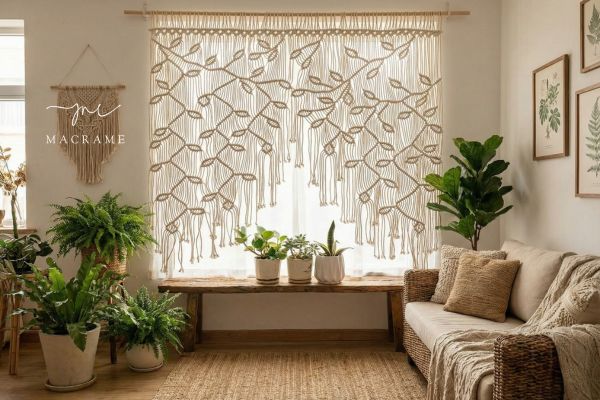
Macrame curtains are decorative curtains created using traditional hand-knotting techniques, in which cotton cords are interconnected through a system of knots ranging from simple to complex. These knots form geometric patterns characterized by symmetry and clear rhythm. Compared to machine-woven fabric curtains, macrame curtains not only maintain natural airflow within a space but also strongly express a rustic, approachable aesthetic infused with handcrafted value.
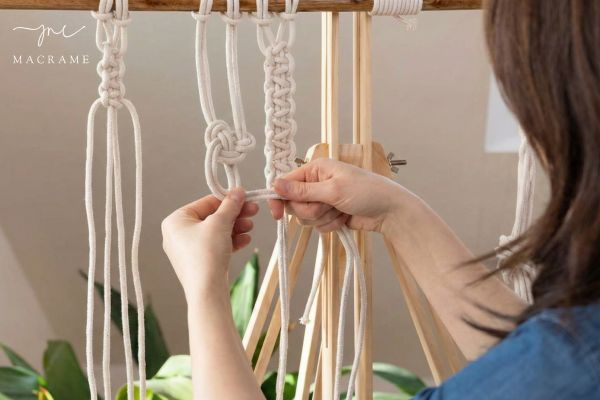
A defining feature of macrame curtains lies in their characteristic knot structures, such as the square knot, lark’s head knot, and spiral knot. These knots are arranged in repeating sequences to create balanced geometric motifs. Fringes are typically left to cascade at the bottom of the curtain or interwoven along its length, softening the overall structure and enhancing its decorative appeal.
In terms of color, macrame curtains primarily feature neutral tones such as ivory white, beige, or earthy brown, the natural shades of cotton fibers allowing them to blend seamlessly into various architectural styles.
Common materials used in macrame curtains
Depending on interior style and intended use, macrame curtains can be crafted from various materials:
- Twisted cotton cord is the most popular choice for modern macrame curtains. Its soft fibers are easy to shape, allowing the curtain to drape beautifully and convey a light, refined feel. Cotton is also eco-friendly and safe for health, making it ideal for indoor living spaces.
- Jute or hemp cord features a more rustic character, with fibers that are coarser and stiffer than cotton. This material is often used in rustic or bohemian interiors, as well as semi-outdoor areas such as balconies or porches.
- Synthetic fibers (polypropylene) offer excellent resistance to moisture and weather, along with high durability. However, due to their lower environmental friendliness and less soft texture, they are rarely used in premium interiors and are mainly suitable for outdoor spaces.
Comparison table of macrame curtain materials:
| Material | Softness | Durability | Eco-Friendliness | Suitable Spaces |
| Twisted cotton | High | High | High | Interior, living room, bedroom |
| Jute / hemp | Medium | High | High | Rustic spaces, balconies |
| Synthetic fiber | Low | Very high | Low | Outdoor areas |
Popular types of macrame curtains
Macrame window curtains
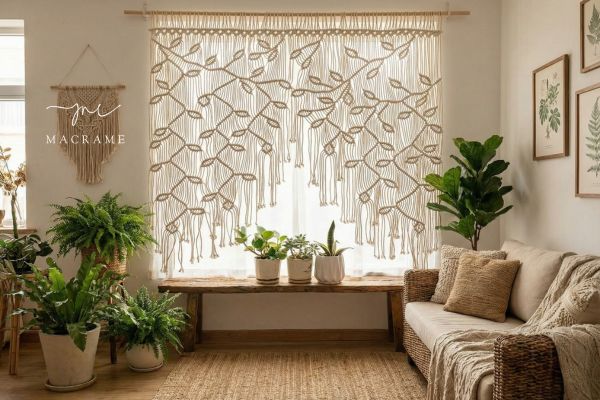
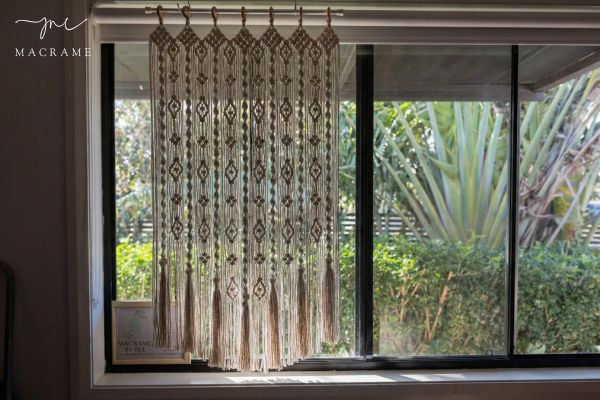
Macrame window curtains are usually moderate in size and loosely knotted, allowing natural light to pass through the knots and create soft sun-shadow effects that gently spread across the floor and surrounding furniture.
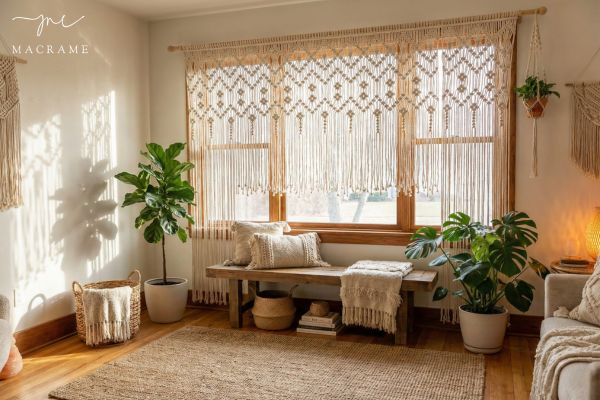
This type of curtain is particularly suitable for spaces such as small living rooms or bedrooms that require ventilation and a light, airy feel. They are often paired with round wooden curtain rods to enhance material harmony. The patterns are typically denser at the top and gradually loosen toward the bottom, creating a sense of height and openness in the overall space.
Macrame room divider curtains
Macrame room divider curtains are designed with wide panels that hang freely from ceiling to floor. Evenly knotted patterns provide a moderate level of privacy while maintaining airflow throughout the space.
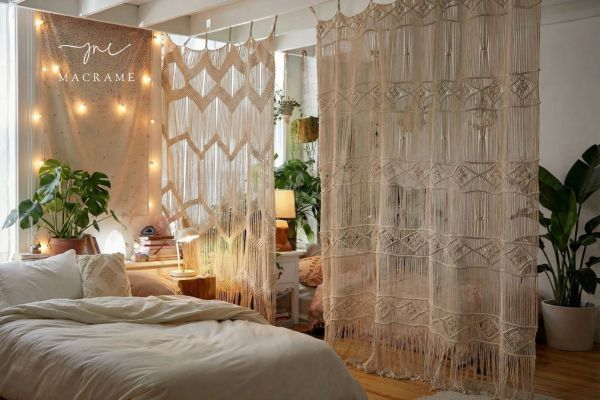
These curtains work well in open-plan layouts, gently separating the living room from the kitchen or defining a workspace within a shared area. When draped, the curtain forms a semi-open, semi-closed screen that clarifies spatial boundaries without creating a heavy or enclosed feeling.
Macrame wall hangings
Macrame wall hangings are often regarded more as tapestry-like wall art than functional window coverings, as their primary value lies in visual impact and aesthetic expression.
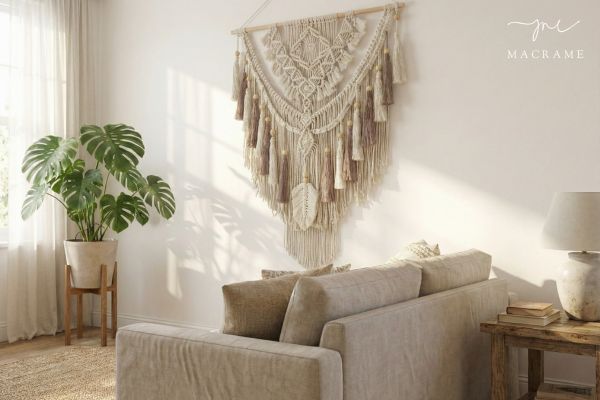
Their sizes vary widely, from small decorative pieces to large-scale designs featuring multiple layers and combined with wooden beads, bamboo rings, or other handcrafted details. When hung above a bed or behind a sofa, macrame wall hangings help define interior style and add depth to the living space.
Macrame doorway curtains
Macrame doorway curtains serve as an elegant alternative to traditional plastic bead curtains, offering a softer and more refined look for modern interiors.
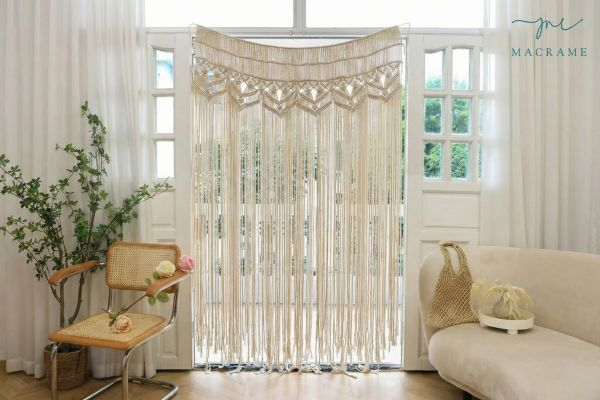
Thanks to their open knot structure, these curtains help deter insects while still allowing natural air circulation, keeping the space comfortable. They can also be easily drawn aside when passing through, making them ideal for main entrances or interior doorways without causing daily inconvenience.
Advantages and disadvantages of macrame curtains
Advantages
- High aesthetic value: macrame curtains possess a romantic, handcrafted beauty that enhances relaxation and adds depth to interior spaces.
- Eco-friendly: Mostly made from natural cotton fibers, they are safe for health and biodegradable.
- Uniqueness: Each handmade curtain is one of a kind and can be customized in size and pattern to suit specific spaces.
- Versatile use: Suitable for light partitioning, gentle screening, decoration, and even as photo backdrops.
- Good durability: Cotton fibers offer relatively high tensile strength, allowing the curtain to retain its shape when properly used and maintained.
Disadvantages
- Higher cost: Due to their handcrafted nature and meticulous processes, macrame curtains are generally more expensive than mass-produced curtains.
- Delicate cleaning: They attract dust easily and are not machine-washable, requiring careful cleaning to prevent fiber distortion.
- Limited light-blocking: macrame curtains do not fully block light and are better suited for spaces that benefit from natural illumination.
- Relatively heavy weight: Large-format designs can be quite heavy, requiring sturdy curtain rods for safety.
Guide to choosing and maintaining macrame curtains
How to choose macrame curtain
When selecting a macrame curtain, clearly identify its intended purpose to choose an appropriate knotting style. For sun-blocking or privacy needs, densely knotted designs with high knot density help reduce light and enhance seclusion. In contrast, loosely knotted designs with long fringes are better suited for decorative purposes and maximizing natural light.
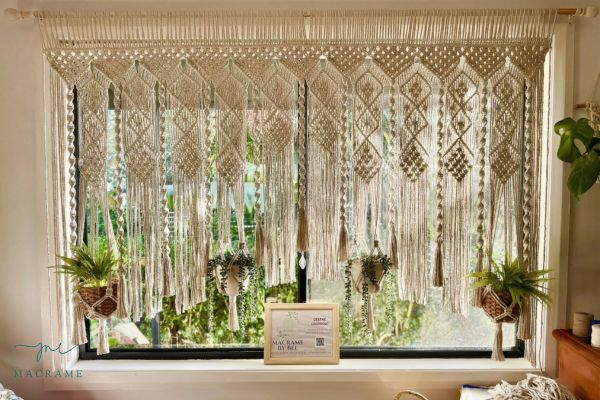
Curtain size also plays a key role in overall aesthetics. macrame curtains achieve the best visual effect when their width is approximately 1.5 times wider than the window frame, allowing for natural drape and gentle gathers.
In terms of material, tightly twisted cotton cord with a smooth surface and natural ivory tone is ideal, as it helps the curtain maintain structure, ensures long-term durability, and blends easily with various interior styles.
Maintenance tips for long-lasting beauty
To keep macrame curtains looking their best, regular maintenance is recommended to prevent dust from embedding deeply into the fibers:
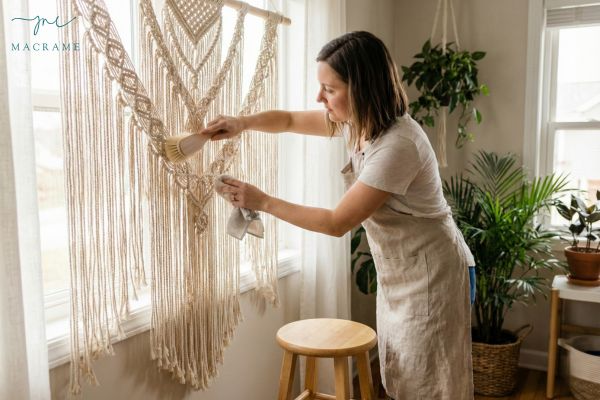
- Use a feather duster or vacuum cleaner on a gentle setting weekly to remove surface dust and reduce the need for frequent washing.
- Hand wash in cold water with mild soap; avoid soaking for too long to prevent the cotton fibers from becoming overly soft and losing shape.
- Avoid vigorous rubbing of the fringes during washing, as this may cause fraying or tangling.
- Rinse thoroughly and gently squeeze out excess water; avoid twisting or pulling, which can stretch the fibers.
- Air-dry in a well-ventilated area away from direct sunlight, as high heat can cause discoloration or fiber stiffness.
- Hang the curtain straight or lay it flat while drying and after it is fully dry to preserve its natural form.
- Once completely dry, use a wide-tooth comb to gently brush the fringes, restoring their smooth and even appearance.
Macrame curtains are more than just interior furnishings, they are handcrafted artworks infused with the breath of nature, contributing to a green and inspiring living environment. Within the modern minimalist trend, macrame curtains transform plain corners into warm, private, and poetic retreats.
If you are looking for a high-quality handmade macrame curtain, visit JNC Macrame to discover the most refined and meticulously crafted designs. Don’t forget to follow JNC macrame for even more home décor inspiration!


Category
Featured post